Salad in a Jar

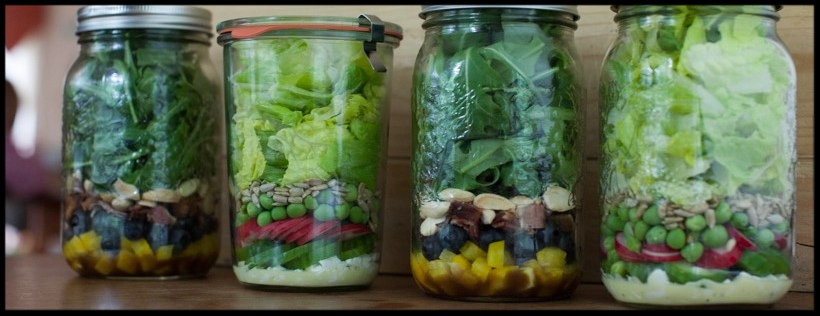
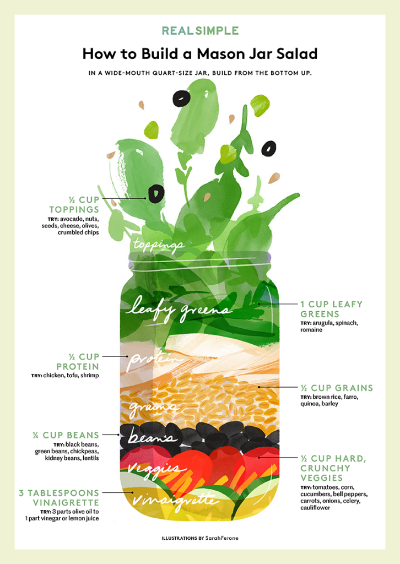
Planning meals is a great way to make sure your vegetables don’t go to waste and to help you eat the way you want to.  These mason jar salads are a great way to not only plan your meals, but also prepare them ahead of time.  You simply layer the ingredients–dressing on the bottom, water resistant ingredients in the middle and dry ingredients on the top. This will keep your salad fresh, so you can make a week’s worth at one time.  You can easily grab one from your fridge in the morning and take it to work.  Another reason I like using mason jars is because there’s something about being able to see my food that helps me remember to eat it.  I like to open my fridge and know what is in a container so I don’t forget about something until it is unrecognizable:)  Here’s a little tutorial on making the mason jar salads along with several different recipes.  Don’t forget to check out our recipe page for some delicious homemade dressings.  
Click on this link for 
18 Mason Jar Salad Recipes

Pesto Chango!

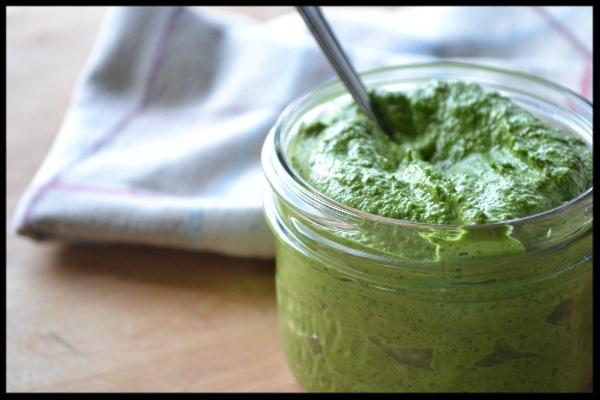
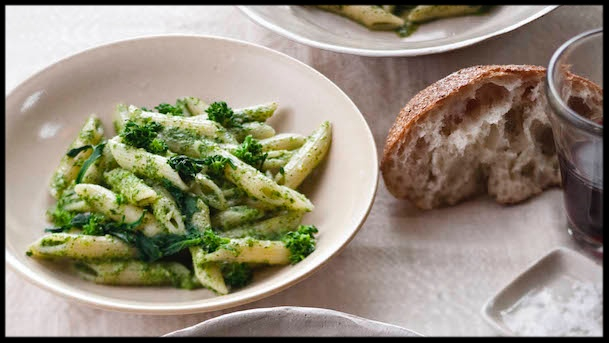
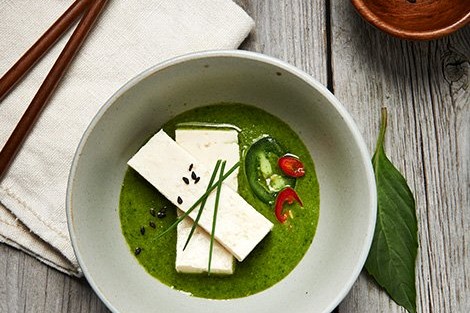
The beginning of a CSA season is chock full of greens and sometimes your fridge can get a little crowded.  To take advantage of all those great greens, you have to get a little creative.   Whenever I have a green that I don’t think I can get to, I make pesto out of it. I either keep it in the fridge to use in the next week or freeze it to be eaten later in the year.   Pestos are great on a sandwich, on a pizza, on pasta, as a dipping sauce, or even as a salad dressing. 

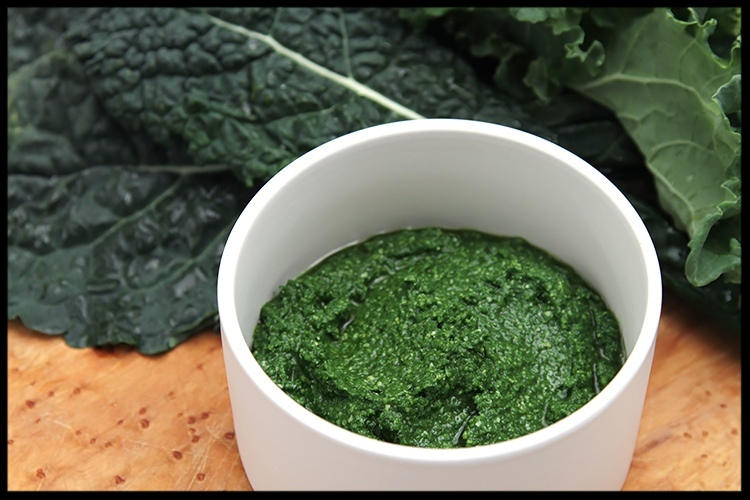
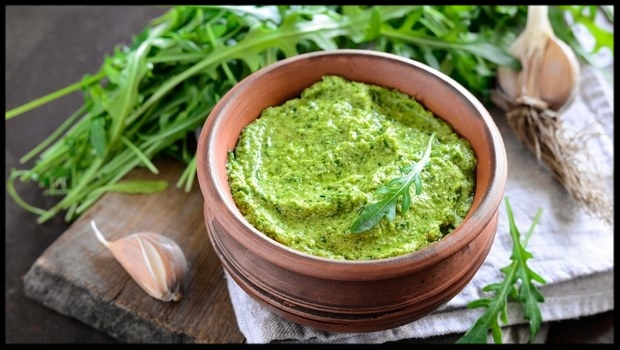
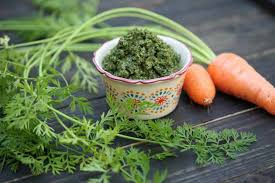
I used to think pesto was a luxury that I could only indulge in once in a while until I realized  pesto doesn’t just have to be heaps of basil and bank-breaking pine nuts.  Really pesto is just garlic, olive oil, greens, nuts, cheese, and lemon juice (optional).  You can substitute just about any green(parsley, cilantro, arugula, broccoli rabe, scallions, kale, mustard greens, radish tops, carrot tops, beets greens, spinach) or nut (walnuts almonds, macadamia nuts, pecan, pistachios, sunflower seeds, pumpkin seeds, peanuts).  I most often use sunflower seeds because they are the least expensive.  This is a great option for anyone with a nut allergy that has never tried pesto.  Click on any of the links above to turn whatever green you have left in your fridge into pesto. 

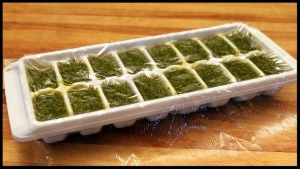
Check out this article for an easy and convenient way to freeze pesto.  You can make a large batch and then just pull out one serving at a time.  We did this last year and it was great to pull one out in the middle of winter for that fresh spring taste.  

Basic tips to get you started…

1.  Unpack your share and store it properly right away.  This will help keep your share fresh all week.  If there is a vegetable that you are unsure how to store it, check out our recipe page or the website, Real Food Encyclopedia,to learn more about each one. Remember that we wash all of your bagged greens and bunched produce before they go into your shares (exception of basil). The bags that you recieve your loose greens in are ideal for storage, they are perforated and allow for unnecessary moisture to escape. Any leafy green product will need to be stored in a plastic bag and all tops should be removed from bunched roots to prevent the root from drying out.

2.  Eat the most perishable produce first.  Produce like Kale, chard, radishes, beets, garlic and carrots can store for a surprisingly long time.  Eat your salads, basil, bok choy, and Tatsoi first. 

3.  Make sure your kitchen is stocked with a good olive oil, sea salt, and pepper grinder.  These simple things can be all you need to add to fresh, flavorful produce.  In minutes you can sautee that last bunch of  kale or throw the bok choy on the grill. 

4.  Have some quick, easy to prepare proteins in your kitchen to round out a veggie-based meal. A fried egg goes with about anything, sliced chicken breast pounded thin will cook on a hot skillet within a couple minutes on each side, a skirt steak or steak tips can be seared on a hot grill in no time, a can of chickpeas or a crock pot of spiced black beans can be thrown on top of any salad or sautéed greens, Kamut or Quinoa are two grains that have a relatively high amount of protein.  

5.  If you’re preparing a more in depth recipe, double it and make enough for leftovers so you can enjoy the fruits of your labor twice.  

6.  Add veggies to meals that you don’t normally add veggies to.  For example, this week I made some spaghetti and added some sautéed tatsoi, fresh green garlic and cilantro. Load up those scrambled eggs with veggies or add some greens to your pastas.  

7. You’ll find out what’s coming in your next share on Thursday nights. Get a couple of meal ideas ready and have your ingredients on hand when your CSA drop day comes.
Making the Most of Your CSA

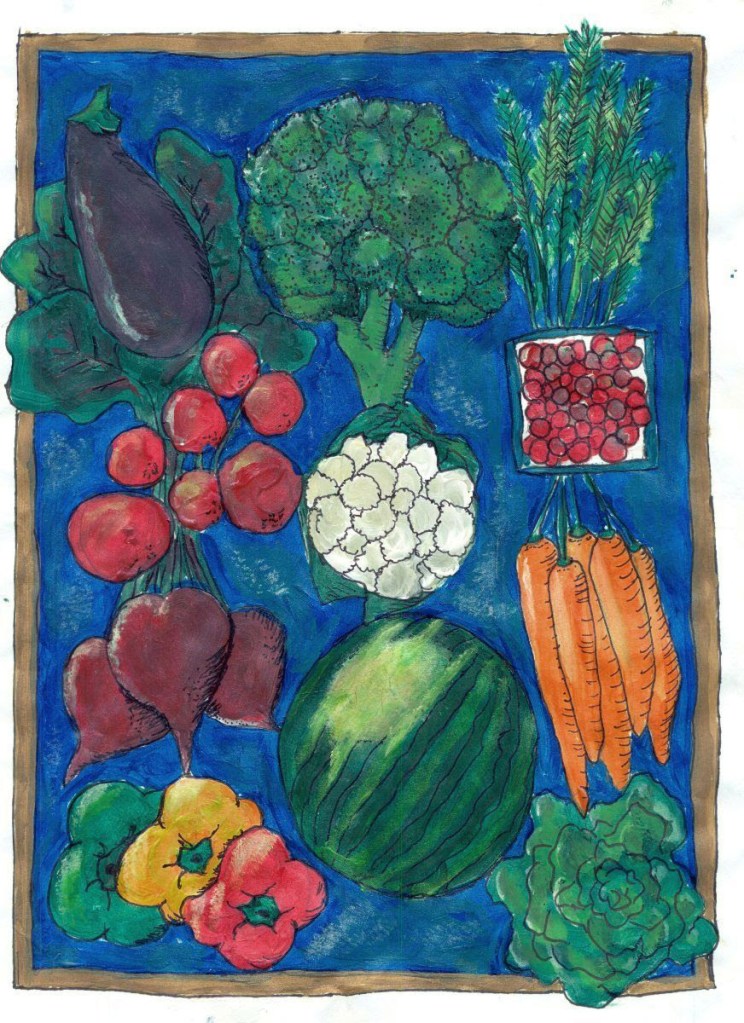
Thanks for joining our CSA and choosing to eat seasonal, organic and local produce.  In this modern world, trying to eat locally may not be the most convenient way to shop or eat, but you will get to enjoy the freshest, tastiest, and most nutritious vegetables; not to mention, the positive effects it has on the environment and local economy.     There is definitely a learning curve when it comes to eating within the boundaries of the season, but I think that just as we’ve developed an appreciation for the sights, smells and sounds of each season, we can learn to anticipate and appreciate the tastes of each season as we make our way around the sun.  The refreshing greens and spicy radishes of spring to wake us up, the sweet and juicy tomatoes, corn & melons that give us the excitement and smiles of summer, and the savory squash and onions that fill our house with the aromas that help remind us to slow down.    This blog is here to guide you through this CSA season of produce and show you ways to enjoy it during the winter, when local food is less available.  I’ll be posting articles on what to do with all those greens, how to preserve, etc.  If anyone would like to post an article about something that works for them, please contact me at harlequincsa@gmail.com.  I’d love to share it here.